Carlo Friedrich · 18 October 2026
Exploring Nutrient Transfer Pathways Through Root Networks in Tropical Woodland Fringes During Dry Season Transitions
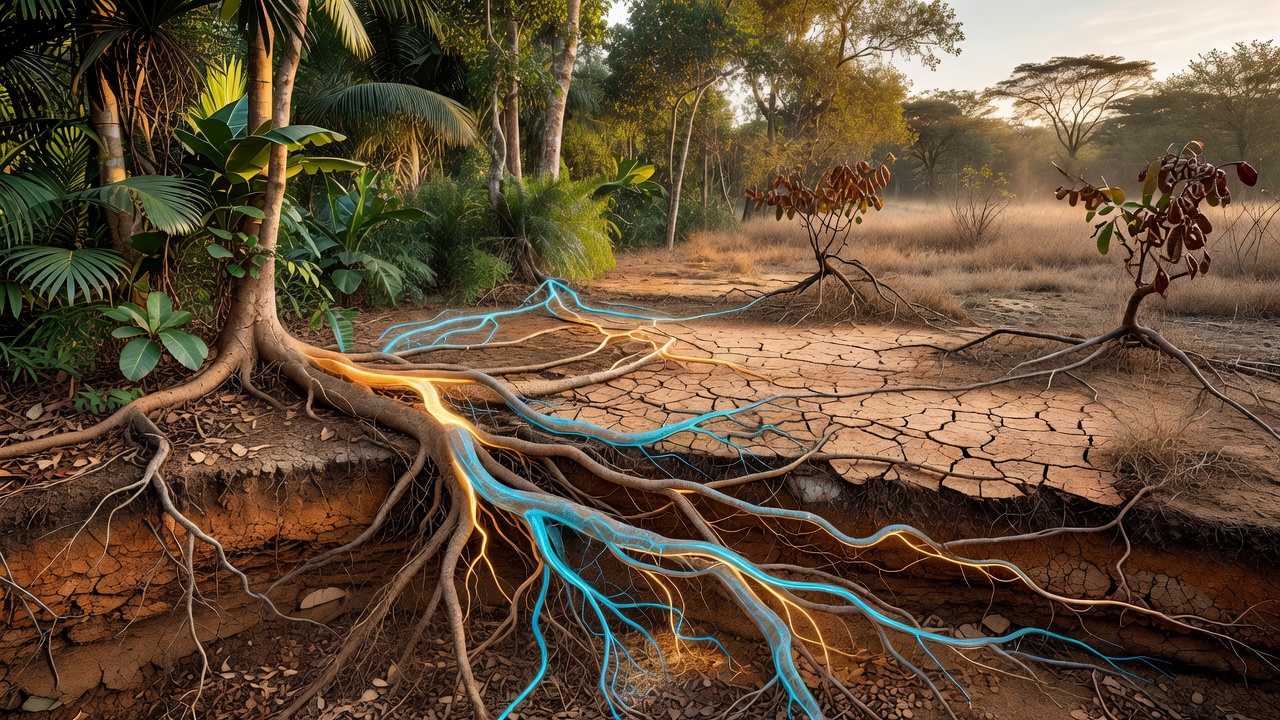
Root networks in tropical woodland fringes serve as conduits for nutrient movement, particularly when rainfall patterns shift and surface moisture declines. Researchers have documented how trees and understory plants exchange phosphorus, nitrogen, and other minerals through fungal hyphae and direct root connections, with activity intensifying as dry periods begin. Studies in regions such as the southern Amazon basin and West African woodland margins show these pathways remain active even as leaf fall accelerates and transpiration rates change.
Mechanisms of Nutrient Movement in Root Systems
Mycorrhizal fungi form extensive links between individual plants, allowing carbon compounds from one tree to support nutrient uptake in neighboring roots. Data collected from soil core samples indicate that arbuscular mycorrhizal associations dominate in these fringe zones, transferring up to 30 percent of a plant's phosphorus requirements during low-rainfall months. Scientists at field stations in Brazil have measured elevated enzyme activity in shared fungal networks when soil temperatures rise above 28 degrees Celsius, conditions typical of early dry season transitions.
Direct root grafts also contribute, though less frequently than fungal pathways. Excavation work in northern Australian eucalypt woodlands revealed that adjacent trees of the same species maintain xylem connections capable of moving labeled nitrogen isotopes across distances of several meters. These grafts become more significant when surface litter decomposition slows and mineral availability drops.
Seasonal Shifts and Pathway Activation
During the transition into drier months, plants adjust allocation strategies. Fine root production often increases at depths between 30 and 80 centimeters, where residual moisture persists. Monitoring equipment installed across multiple sites shows that nutrient flux through deeper networks rises sharply once surface soil water potential falls below -1.5 MPa. This adjustment helps maintain metabolic functions in canopy species that would otherwise experience nutrient stress.
Observers note that certain pioneer species release organic acids from their roots, solubilizing bound minerals that then move laterally through fungal networks to later-successional trees. In one documented case from the Congo Basin woodland edge, potassium concentrations in recipient plants increased measurably within two weeks of donor root activation following the last heavy rains of the wet season.
Field Evidence and Measurement Approaches
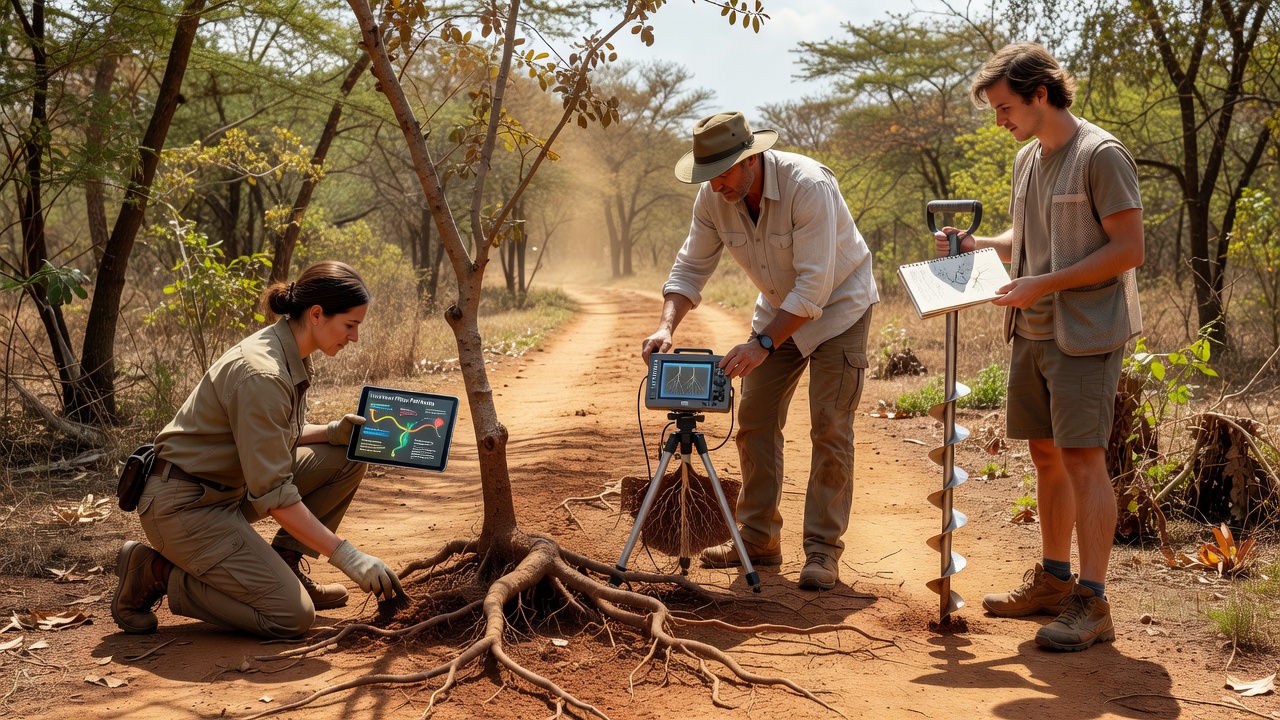
Stable isotope tracing has become a standard method for mapping these transfers. Teams inject carbon-13 and nitrogen-15 into donor plants and track their appearance in receiver roots weeks later. Results from projects coordinated across Southeast Asian dipterocarp fringes and Central American dry forest margins demonstrate that transfer rates vary with species composition and soil texture, yet remain consistent in direction from larger canopy trees toward smaller understory individuals.
According to EMBRAPA research summaries, soil moisture sensors paired with root ingrowth cores have recorded a 25 percent increase in hyphal density during the first six weeks of the dry season in Brazilian cerrado edges. Similar patterns appear in data sets from South African savanna-woodland boundaries, where the South African National Biodiversity Institute maintains long-term plots.
October 2026 marks the start of expanded sensor arrays at several long-term study sites, with new probes scheduled to log real-time nutrient gradients across additional fringe transects in both the Neotropics adn Paleotropics. These installations build on earlier arrays that already captured two full seasonal cycles.
Interactions With Soil and Microbial Communities
Bacterial communities living along root surfaces also influence transfer efficiency. Certain actinomycetes accelerate organic matter breakdown near graft points, releasing ammonium that fungi then shuttle between plants. Soil pH shifts common in dry season conditions further affect solubility, with researchers recording temporary drops of 0.4 pH units that coincide with peak transfer periods.
Yet these microbial partnerships face constraints. Excessive drying can fragment hyphal strands, temporarily reducing connectivity until rewetting events occur. Models based on multi-year data sets predict that repeated late-season dry spells may shorten the window of effective nutrient sharing in some woodland types.
Conclusion
Root network pathways in tropical woodland fringes demonstrate measurable responses to dry season transitions through both fungal and direct connections. Continued isotope work and sensor deployment through 2026 will refine understanding of transfer volumes and species-specific roles across additional geographic zones.